
Blog

5 Misconceptions About the Americans with Disabilities Act & 2010 ADA Standards for Accessible Design

More than three decades after the passage of the Americans with Disabilities Act (ADA), the law is widely recognized, but misconceptions about how it applies to buildings and facilities continue to create confusion, and in some cases, costly compliance issues.

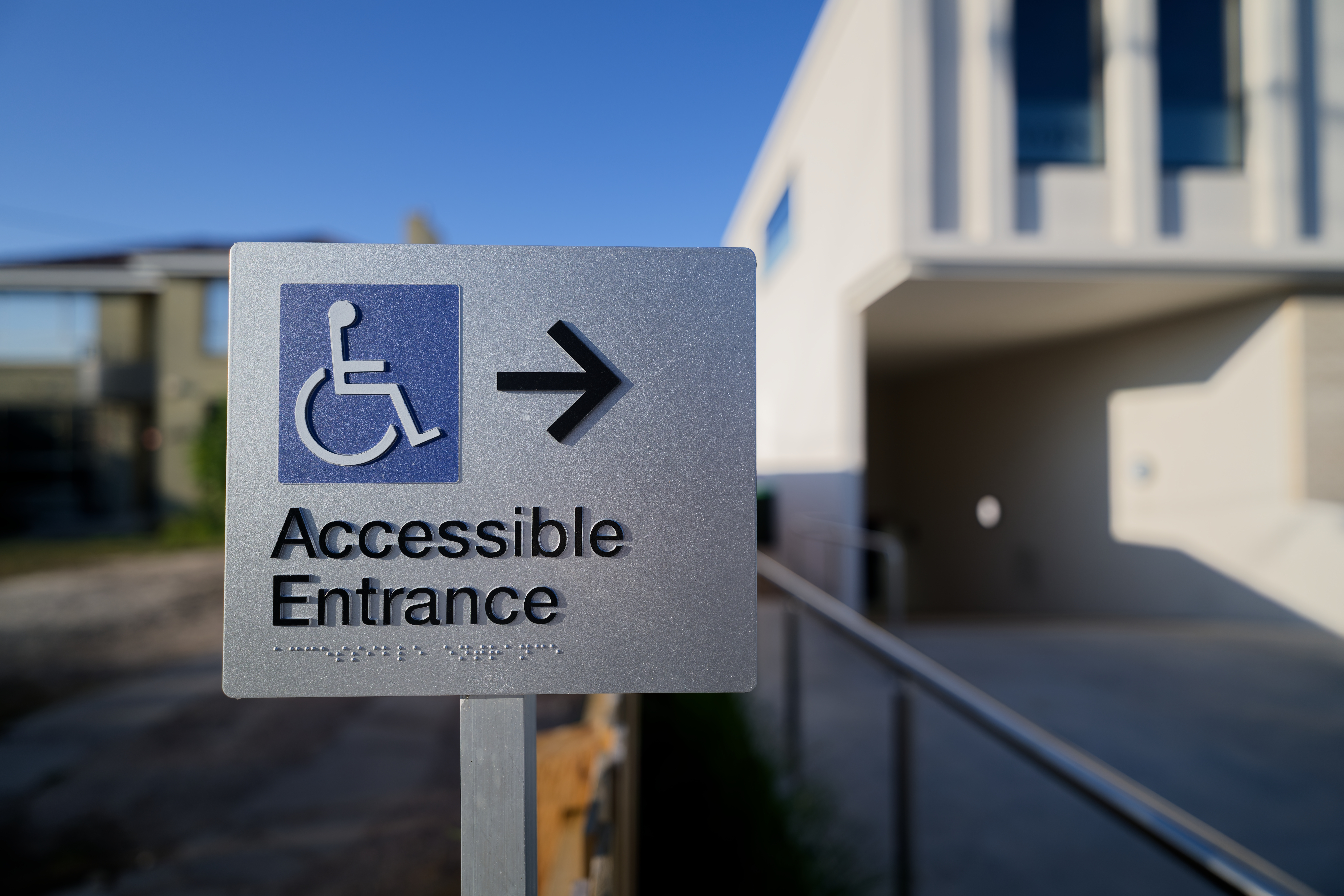
Accessible entrance sign with the International Symbol of Access and directional arrow, positioned in front of a building entrance and accessible route

The Americans with Disabilities Act (ADA) was signed into law on July 26, 1990. This federal civil rights law prohibits discrimination based on disability and declares that people with disabilities must have equal access to all areas of public life, including employment, public services, public accommodations, and telecommunications.

One year later, on July 26, 1991, the Department of Justice released the 1991 ADA Standards for Accessible Design to be used in the design and construction of new and altered buildings. These technical standards have since been replaced with the 2010 ADA Standards for Accessible Design that we use today.

Despite the importance of the ADA and its enforcement over the past three decades, there are still misconceptions about what the law requires for buildings and facilities.

Below are five of the most common misconceptions that SWA’s accessibility consultants encounter when working with building designers, developers, and owners on ADA compliance.

Myth #1: All buildings that predate the ADA are exempt from accessibility requirements.

Cobblestone street lined with restaurants and bars, illuminated by decorative string lights suspended overhead.

Unlike building codes, the ADA does not allow for the concept of “grandfathering.” According to the ADA, building owners and managers have the ongoing obligation to remove barriers to access for people with disabilities, no matter the age of a building. Specifically, if a barrier to access exists in a building that predates the ADA, there is an obligation to remove the barrier if doing so is readily achievable.

“Readily achievable” means that fixing the barrier does not involve too much difficulty or expense. Such determinations must be made on a case-by-case basis and consider many factors, including financial resources.

It is also important to consider the applicability of ADA requirements to any planned renovations to determine the level of accessibility required to renovated spaces, building entrances, accessible routes, etc.

Myth #2: Following the accessibility requirements of the building code will satisfy the accessibility requirements of the ADA.

Even though the 2010 ADA Standards for Accessible Design are similar to the technical standards referenced by many building codes (e.g., ICC A117.1 Standard for Accessible and Usable Buildings and Facilities), they are mutually exclusive.

Compliance with the accessibility requirements of the building code does not satisfy compliance with the accessibility requirements of the ADA; and vice versa: compliance with the ADA does not automatically satisfy state or local accessibility regulations.

The general rule of thumb is to apply all applicable laws, codes, and standards and comply with the most stringent requirement.

Myth #3: The DOJ has a formal certification process to approve ADA-compliant products.

There is no official process available to certify that a product is ADA compliant, nor does the U.S. Department of Justice (DOJ) certify buildings as meeting the requirements of the ADA.

Product manufacturers often market products as “ADA compliant” or “ADA approved,” but manufacturer claims are not reviewed or approved by the DOJ, and claims of ADA compliance made by manufacturers are often not correct.

Architects and designers must carefully review the details and dimensions of any specified product and provide context for installation to ensure compliance.

Compliance typically depends not only on a product’s dimensions but also on how and where it is installed. A product that is appropriate in one situation may not be compliant in another.

In short, buyer beware when selecting products.

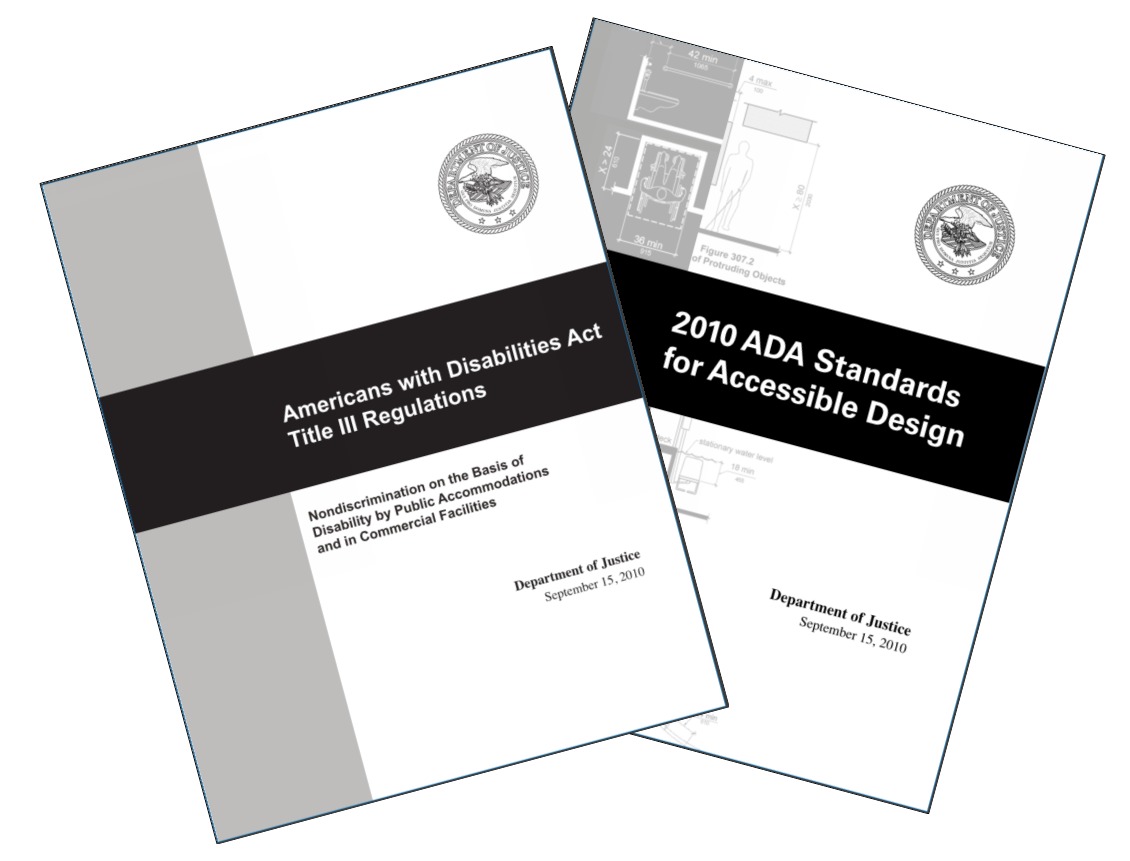
Cover pages of the ADA Title III Regulations and the 2010 ADA Standards for Accessible Design

Myth #4: Whenever a building is required to be accessible, that means it must comply with the ADA.

The term “ADA” is often used as shorthand for anything related to accessibility, yet the ADA does not apply to many types of facilities.

For example, although a newly constructed market-rate multifamily residential building that includes only dwelling units and resident amenities is required to be accessible under the Fair Housing Act and local building codes, it is not required to comply with the ADA.

Compliance with the ADA is only required to the extent that the ADA applies.

Depending on the project, a combination of accessibility requirements from the ADA, the Fair Housing Act (FHA), Section 504 of the Rehabilitation Act of 1973 (Section 504), state or local accessibility laws, and state or local building codes may apply, among others. Determining which requirements apply is one of the most important steps in any accessibility compliance strategy.

Myth #5: Movable tables in a restaurant are not required to be accessible because the Standards cover only built-in furnishings.

Outdoor restaurant dining area with covered seating, tables, chairs, planter boxes, and string lights along a city street

While it is true that the ADA Standards cover fixed or built-in elements, the broader mandate of the ADA regulations requires equal access. Put another way, the ADA Standards are focused on the built environment—much like a building code—and the ADA is a civil rights law that has an overarching objective of ensuring equitable use for all.

This means that although the Standards may not specifically cover movable furnishings, businesses may still have obligations under the ADA to ensure that people with disabilities can access and use dining areas on an equal basis with other patrons.

Eliminating Misconceptions About the ADA

Accessibility compliance is rarely as simple as checking a single code requirement or product specification. Building designers, developers, and owners must understand how federal, state, and local accessibility laws and building codes work together.

Misunderstandings about the ADA can lead to costly redesign, remediation, accessibility complaints, and litigation. By addressing accessibility early in planning and design, project teams can reduce risk while creating spaces that are more usable and inclusive for everyone.

Have questions about ADA compliance or accessible design requirements? Our accessibility consultants help project teams navigate the ADA, the Fair Housing Act, Section 504, and other accessibility requirements throughout design, construction, and occupancy. Contact us!

Contributor: Andy Yarrish, Senior Accessibility Consultant at SWA